Free test · No upload · No account
The Attractiveness Test: measure your face, see the numbers
Take a photo with your camera or upload one, and this AI attractiveness test maps 478 facial landmarks, scores symmetry, golden ratio and facial thirds against a distribution of 7,997 measured faces, and shows you every number it used. The free test runs entirely in your browser - it never uploads your photo.
Step 1
Take or upload a front-facing photo
One face, looking straight at the camera, no sunglasses, even light. The free measurement runs in this browser tab - nothing is uploaded unless you later choose to create the full report.
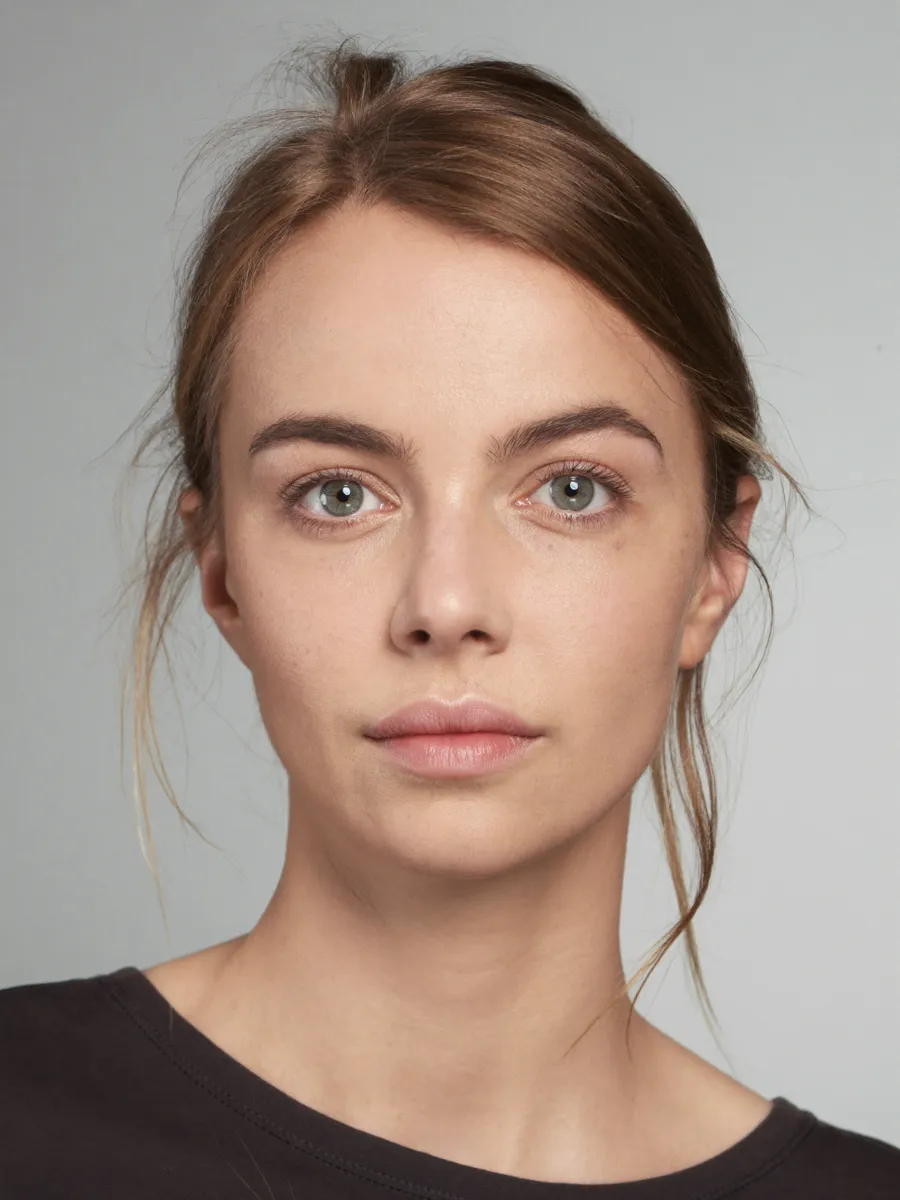
8.2
Example reading - not your score
- Symmetry
- 91
- Thirds
- 84
- Fifths
- 79
- Ratio
- 88
478
Landmarks mapped per face
0
Photos uploaded or stored
6
Component scores shown, not hidden
7,997
Scans behind the percentile bands
What this attractiveness test actually measures
Four measurements carry the composite score, and the test shows you all four rather than collapsing them into an unexplained number:
- Bilateral symmetry. Each paired feature - eyes, brows, nose, mouth, jaw - is compared against its mirror across the facial midline, and the deviation is converted to a 0-100 score. The jaw is weighted heaviest because it is the pair the eye notices most.
- Golden ratio. Face height against face width, scored by how close it sits to the classical 1.618 target for the visible face.
- Facial thirds. Hairline to brow, brow to nose base, nose base to chin. An even split scores highest; the lower third is the one most commonly out of balance.
- Facial fifths. Face width divided into five eye-widths, testing eye spacing and outer-face proportion.
Alongside those, the panel reports your face shape, jaw angle, width to height ratio and head pose. The method page shows the formula and the weights.
What the score is not
Every face-scoring tool online is selling something on the back of a number. So it is worth being blunt about what a number like this can and cannot carry.
It cannot tell you whether people find you attractive. Facial geometry is one input into that judgement and a fairly weak one - expression, eye contact, skin, hair, dress, voice, height and simple familiarity all move it more. A face that measures at 6.4 and a face that measures at 8.1 are routinely rated the other way round by actual humans.
It also cannot tell you what needs fixing, because a symmetry deviation of four percent is not a problem that needs solving. It is just a fact about a face, the same way a shoe size is a fact about a foot. This site never recommends a procedure or points you at a surgeon - the optional paid report explains the measurements and suggests grooming and styling, and that is as far as anything here goes.
If a score from any tool - this one included - lands badly, the useful response is to close the tab. A geometric measurement has no authority over how you feel about your own face.
How to take a photo the test can measure fairly
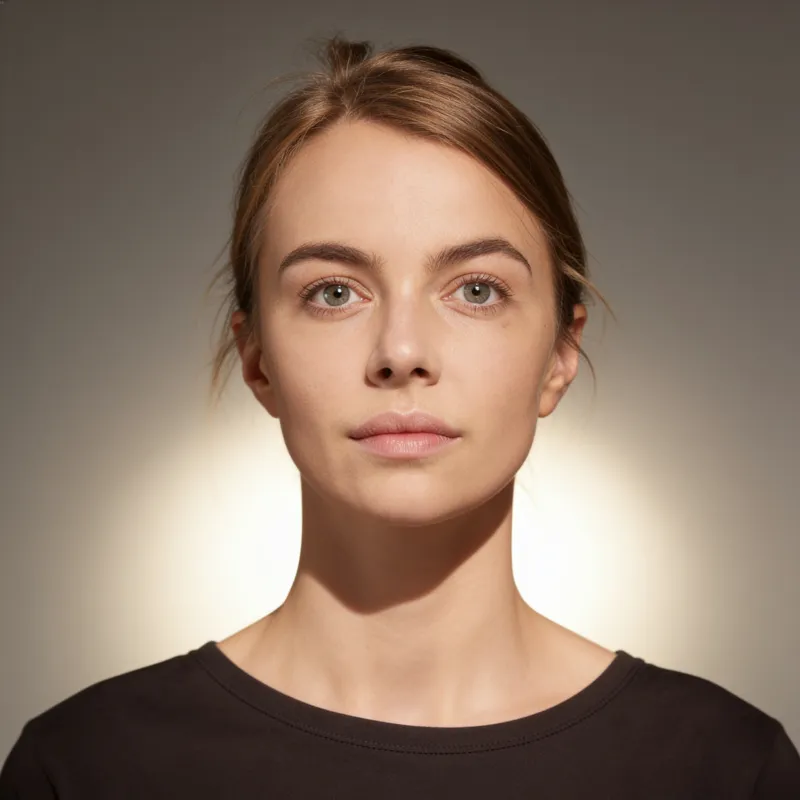
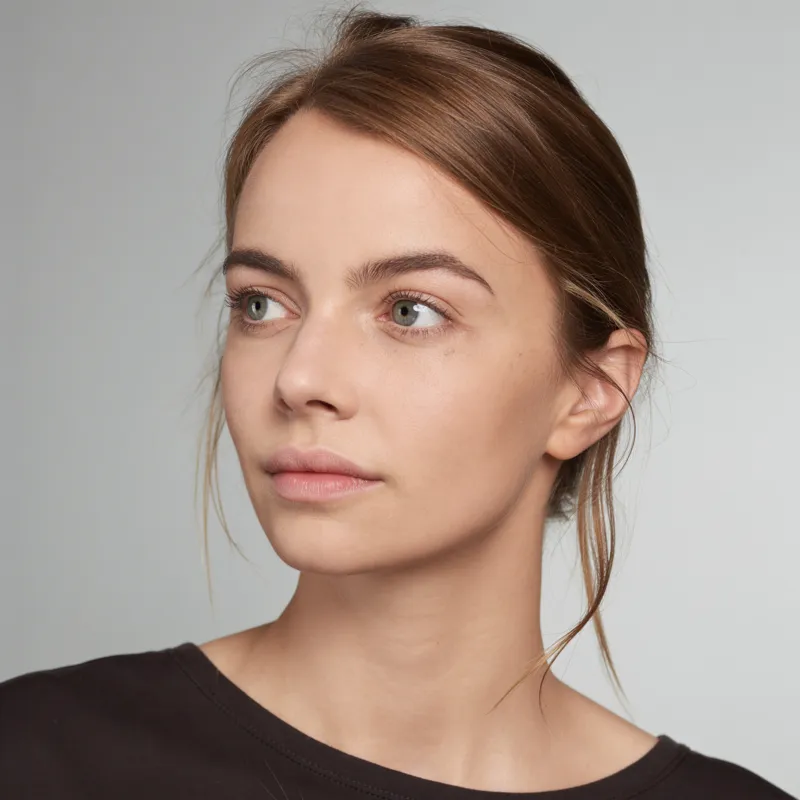
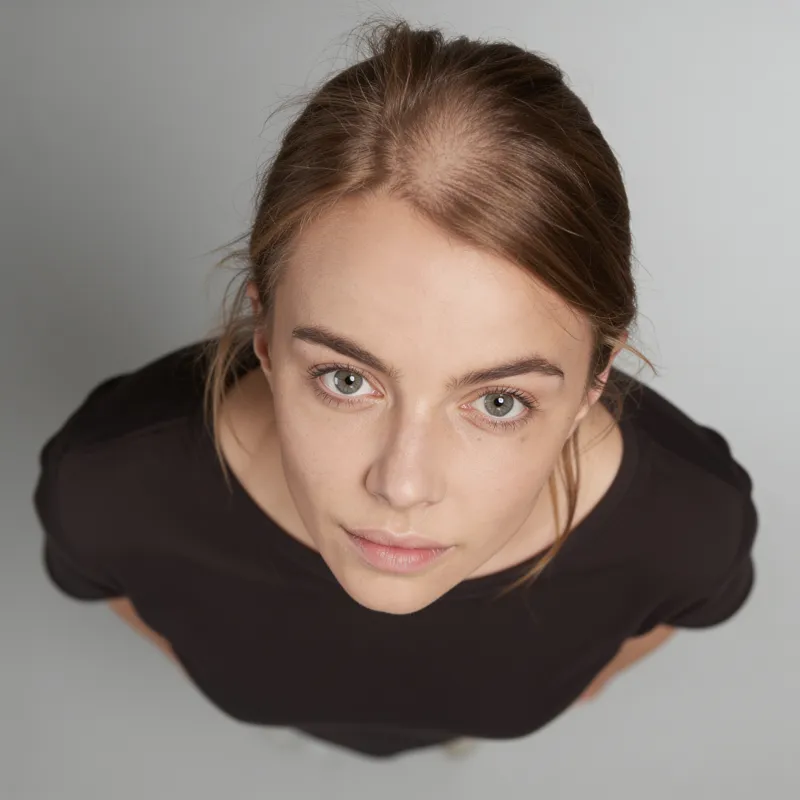
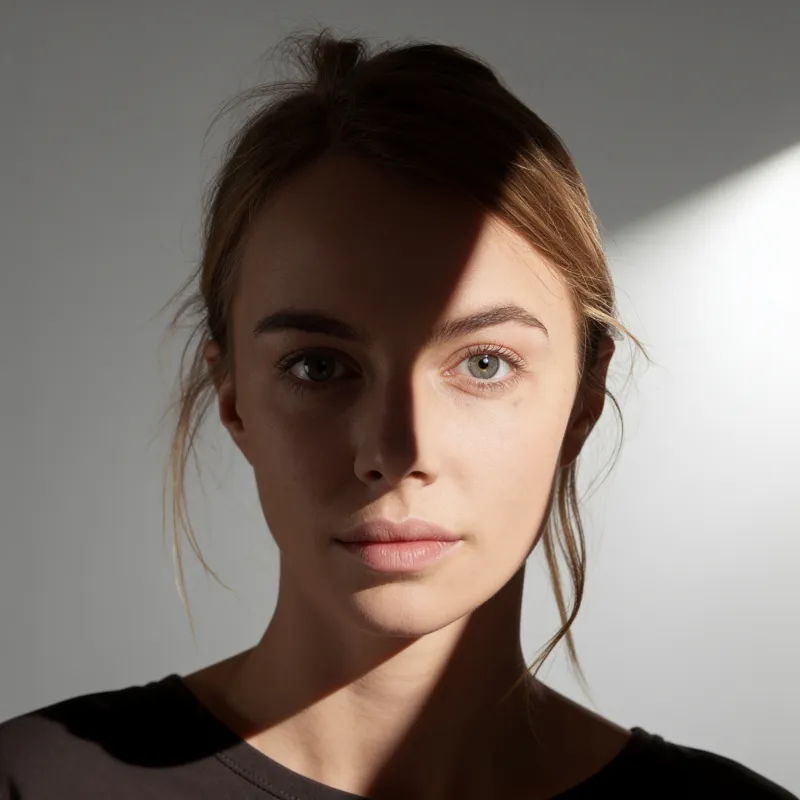
- Face the camera square. Turning even 10° drops symmetry scores.
- Hold the camera at eye level. Shooting from above compresses the lower third; from below, it stretches it.
- Neutral expression, mouth closed. Smiling changes four ratios.
- Even, front-on light. Side shadow reads as asymmetry.
- Hair off the forehead, no glasses, no filters, no beauty mode.
- One face in frame, filling most of it.
The panel grades your head angle and tells you when it is off, so you can retake before reading anything into the numbers.
Questions people ask
- What is an attractiveness test?
- An attractiveness test measures the geometry of a face from a photo - how closely the two halves mirror each other, how the vertical thirds and horizontal fifths divide up, and how the main distances compare to classical proportion targets - then reports the result as a score. It measures shape and spacing. It cannot measure charisma, expression, grooming, style or the way a face moves, which is most of what people actually respond to.
- Is this attractiveness test free?
- Yes. The test, every score and every measurement shown with it are free, with no account, no email and no trial. The whole measurement runs as JavaScript in your own browser tab. The one thing sold on this site is an optional full report that explains every measurement in depth - the free score never depends on buying it.
- Is my photo uploaded or stored anywhere?
- The free test never uploads your photo. The face-landmark model is downloaded to your browser and the photo is read locally by that model - no request carries the image, and it disappears when you close or refresh the tab. Only if you later choose to buy the full report is your photo sent, once, with your explicit permission, to render its images - the privacy page states exactly what happens then.
- How accurate is an AI attractiveness test?
- The geometry itself is precise and repeatable - the same photo returns the same numbers every time, to the decimal. What is not precise is the leap from geometry to attractiveness. Published research finds symmetry and proportion explain only a modest share of how attractive people rate a face; the rest is expression, skin, grooming, styling, colouring and familiarity. Treat the score as an accurate measurement of a narrow thing, not an accurate verdict on a broad one.
- Why did my score change between two photos?
- Because the measurement is of the photo, not of you. Turning your head a few degrees compresses one side of the face and drops the symmetry score. Shooting from above shortens the lower third. A smile widens the mouth and changes several ratios at once. The test flags a bad head angle when it detects one - a square, neutral, evenly-lit shot is the only fair comparison.
- What is a good score on the attractiveness test?
- Half of all measured faces land between 6.5 and 8.0 out of 10, with the median at 7.4. Above 8.3 sits in the top 15% of scans and above 8.6 in the top 5%. The distribution is narrow on purpose: real human faces cluster tightly on these measures, so a difference of half a point is a genuinely different geometry, not a rounding artefact.
- Does the test work for men and women equally?
- The geometry is measured identically and scored against the same thresholds. Symmetry, thirds and fifths are not gendered measures. Where sex-linked differences do appear - jaw width, brow position, facial thickness - this test reports them as measurements rather than scoring them against a gendered ideal.
- Does it work for every ethnicity?
- The landmark detection works across skin tones and face shapes. The proportion targets, though, come from a European-descended aesthetic tradition, and 'ideal' spacing differs meaningfully across populations. A lower proportion sub-score can mean your face differs from that particular tradition, not that anything is wrong with it. This is a real limitation of every ratio-based face test, this one included.
- Does the camera option send anything to a server?
- No. Taking a photo with the camera button and uploading a file follow the same path: the frame is captured to a canvas in the page, measured by the model in your browser, and never transmitted. The camera is released the instant you capture. If your browser is inside another app - Instagram, TikTok, a mail app - the camera button is hidden, because inline camera capture is unreliable there; the file picker's own "Take Photo" option works instead.
- Can I use it on someone else's photo?
- Please don't. Measuring another person's face without them knowing is the kind of thing this tool is easy to misuse for. Use your own photo.
- Do you need my email or an account?
- No. There is no account system and nothing to sign up for. If you buy the full report, Stripe collects your email at checkout so the PDF can be delivered - that is the only time an email enters the picture, and it is never used for a mailing list.
Keep reading
- The 1-10 attractiveness scale, and what each band really means
- How attractive am I? What a photo can and cannot answer
- The facial attractiveness test, with all six components explained
- Face symmetry test: how the mirror comparison is scored
- Golden ratio face test, and why 1.618 is the wrong target for a photo
- Male attractiveness test: jaw angle, width-to-height, lower third
- Female attractiveness test: eye spacing, midface, thirds
- Facial harmony: the measure behind the score
- Why ChatGPT gives a different rating every time
- The PSL scale explained, and why this site does not use it